 Procedures
The Children (Guernsey and Alderney) Law 2008 (Children Law) introduced a welfare based, integrated model for responding to concerns about children, including children in need, children at risk of serious harm and children at risk of compulsory intervention. The Children Law is underpinned by a set of key principles which have at their core the welfare of the child as the paramount consideration.
The Children Law created the Child, Youth and Community Tribunal (CYCT) and the role of the Children's Convenor. The CYCT replaces the court in the majority of cases where compulsory intervention is required. More information on the CYCT and Children's Convenor can be obtained at www.convenor.org.gg
The Children Law placed a duty upon the Committee for Health and Social Care (HSC) to prepare a Children and Young People's Plan (CYPP) every three years which sets out how services seek to meet the needs of children and their families. The plan sets out four priority outcomes for children:
- Be Safe and Nurtured
- Be Included and Respected
- Achieve Individual and Economic Potential
- Be Healthy and Active
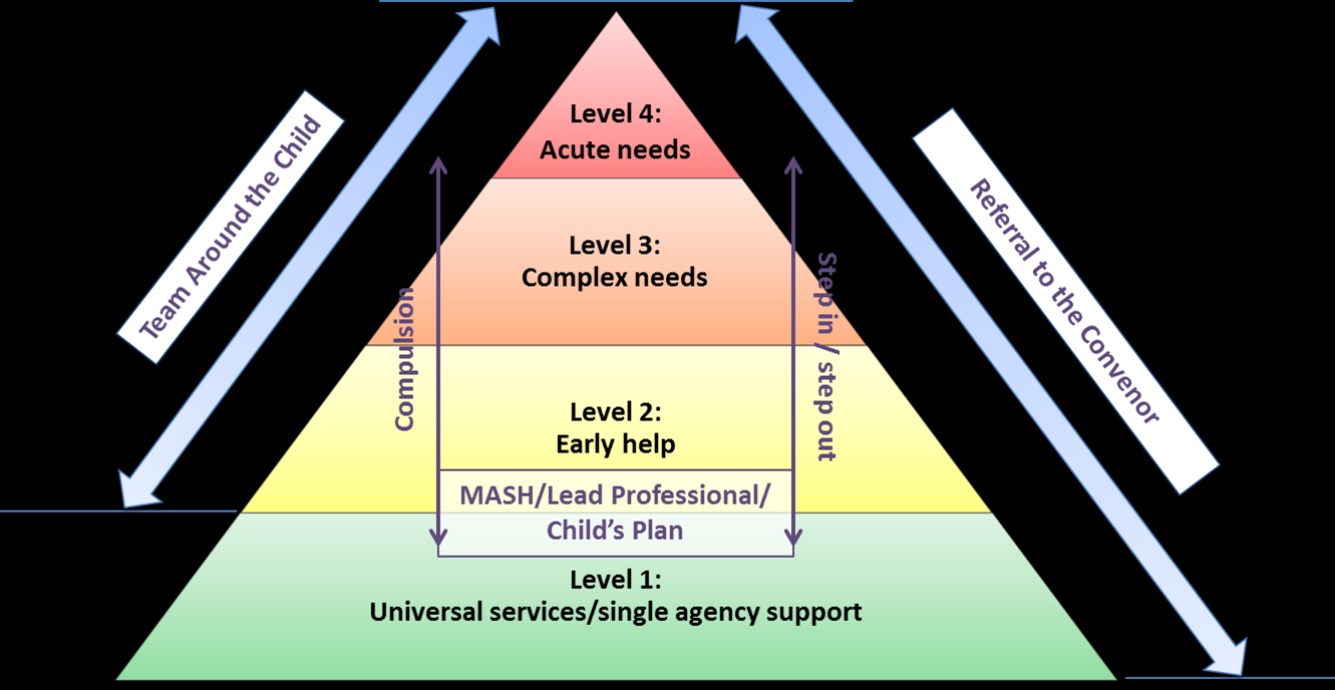
Most children have a number of basic needs that can be supported through universal services. These universal services include education, child health, early years' provision, housing, youth services and voluntary organisations. The Law however recognises that some children will need additional services to achieve a reasonable standard of health and development and some will need compulsory intervention.
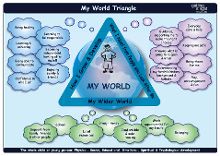
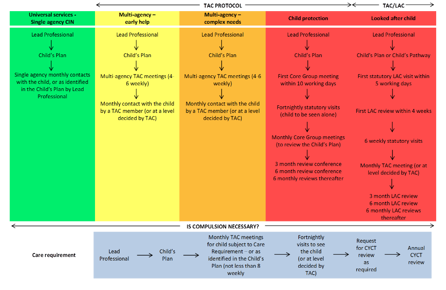
This document provides a framework for professionals who are working with children and families. It aims to help professionals identify when a child may need additional support to achieve their full potential. It introduces a continuum of help and support, provides information on the levels of needs and gives examples of some of the factors that may indicate a child needs additional support. The framework recognises that however complex a child's needs, universal services will always be provided alongside any specialist additional service. It is recognised that children's needs are not static and that they may experience different needs at different times throughout their childhood years. The indicators of need contained in this document are not exhaustive but provide examples that can be used as a tool to assist assessment, planning and decision making when considering the needs of children and their safeguarding needs in particular.
This document should be used in conjunction with the Island Safeguarding Children Partnership (ISCP) Interagency Child Protection Guidelines For some areas of need there may also be specialist tools available for assessment such as the Salford Graded Care Profile for neglect, The MASH Domestic Abuse Referral Pathway.
Remember where there is an urgent and immediate need to protect a child dial 999 to contact the Police. Otherwise for all other children who may be at risk of significant harm, contact the MASH as soon as possible.